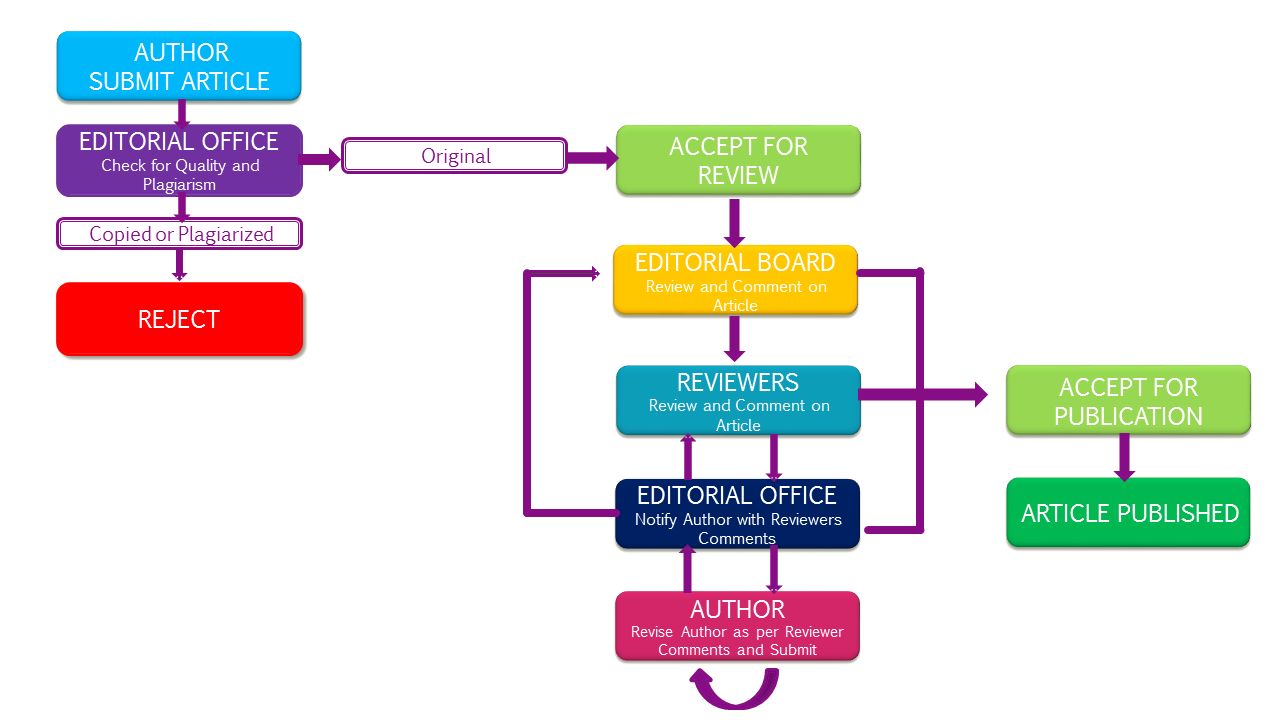
Publishing Process

Editorial Process, Management Structure, and Capacity to Sustain Publication Volume

In recent years, QAJ experienced increased submissions and publications. To sustain this growth while maintaining quality and publication integrity, the journal strengthened its editorial management structure and introduced additional workflow controls:

1) Expanded editorial management structure

- Editor-in-Chief (1) and Managing/Deputy Editor (1) provide oversight and final decisions.

- Section/Associate Editors ([20]) manage subject-area handling and peer review.

- Editorial Office staff ([10]) manage screening, communications, and production coordination.

2) Mandatory pre-review screening (desk checks)
Every submission undergoes initial checks before peer review, including:

- Scope and format compliance

- Similarity screening (plagiarism/unacceptable overlap)

- Ethics/IRB approval and informed consent verification (when applicable)

- Conflicts of interest and funding disclosure verification
- Submissions that fail these requirements are returned for correction or rejected at the desk stage.

3) Peer review capacity and controls

- Each manuscript is assigned to a handling editor.

- At least [2] independent reviewers are invited (additional reviewers when needed).

- Reviewer selection is based on expertise and conflict-of-interest screening.

- Reviewer performance (timeliness and quality) is monitored, and the reviewer pool is continuously expanded.

4) Decision quality assurance

- Editors evaluate the adequacy of reviewer reports and request additional review when evidence is insufficient.

- Revisions are checked against reviewer comments and required ethical statements.

- Final acceptance requires completion of integrity and disclosure checks.

5) Publication ethics enforcement
Procedures are in place to address suspected misconduct (plagiarism, unethical research, fabricated or manipulated data/images, undisclosed conflicts). Outcomes may include rejection, correction, expression of concern, or retraction, depending on findings.

6) Production workflow strengthened for consistency
Accepted manuscripts proceed through standardized steps: copyediting, layout, proofreading, metadata checks, and final editorial approval, ensuring consistent quality.


Editorial Capacity Snapshot

  • Handling editors (Section/Associate): 20

  • Editorial office staff: 10

  • Review model: at least 2 reviewers per paper

  • Integrity gates: similarity + ethics/consent + COI/funding checks

  • Production QA: copyediting + proofreading + metadata checks


Management Structure


Editorial Roles

(Assigned in Journal Management)

  • Journal Manager: Sets up the journal and staffs editorial roles (can also serve as an Editor and other roles).
  • Editor: Oversees editorial process; can assign submissions to Section Editors to see through Submission Review and Submission Editing; undertakes scheduling of content and publishing of journal.
  • Section Editor: Oversees Submission Review and possibly Submission Editing for assigned submissions.
  • Copyeditor: Works with submissions to improve grammar and clarity, poses questions to author on possible errors, and ensures strict adherence to journal's bibliographic and textual style.
  • Layout Editor: Transforms copyedited submissions into galleys in PDF format.
  • Proofreader: Reads galleys for typographic and formatting errors.